Playground

01 / The Top / Visible narrative surface

Quilting
through
Time

The top of a quilt is what the world sees first: pattern, color, history and proof of the hand. This page reads quilting as a graphic system and a timeline of resistance to speed.

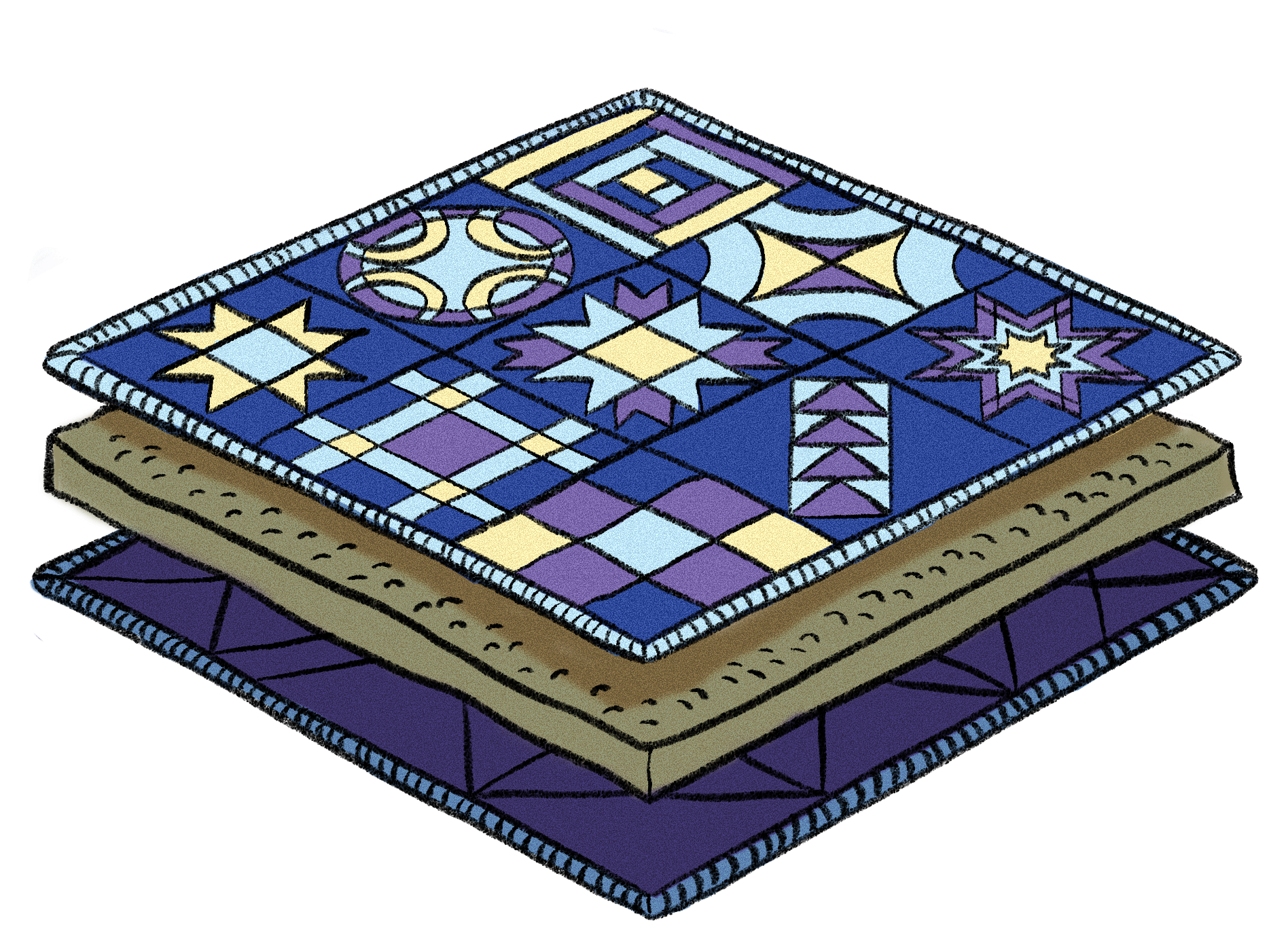
Isometric illustration of the quilt sandwich with the top layer highlighted.
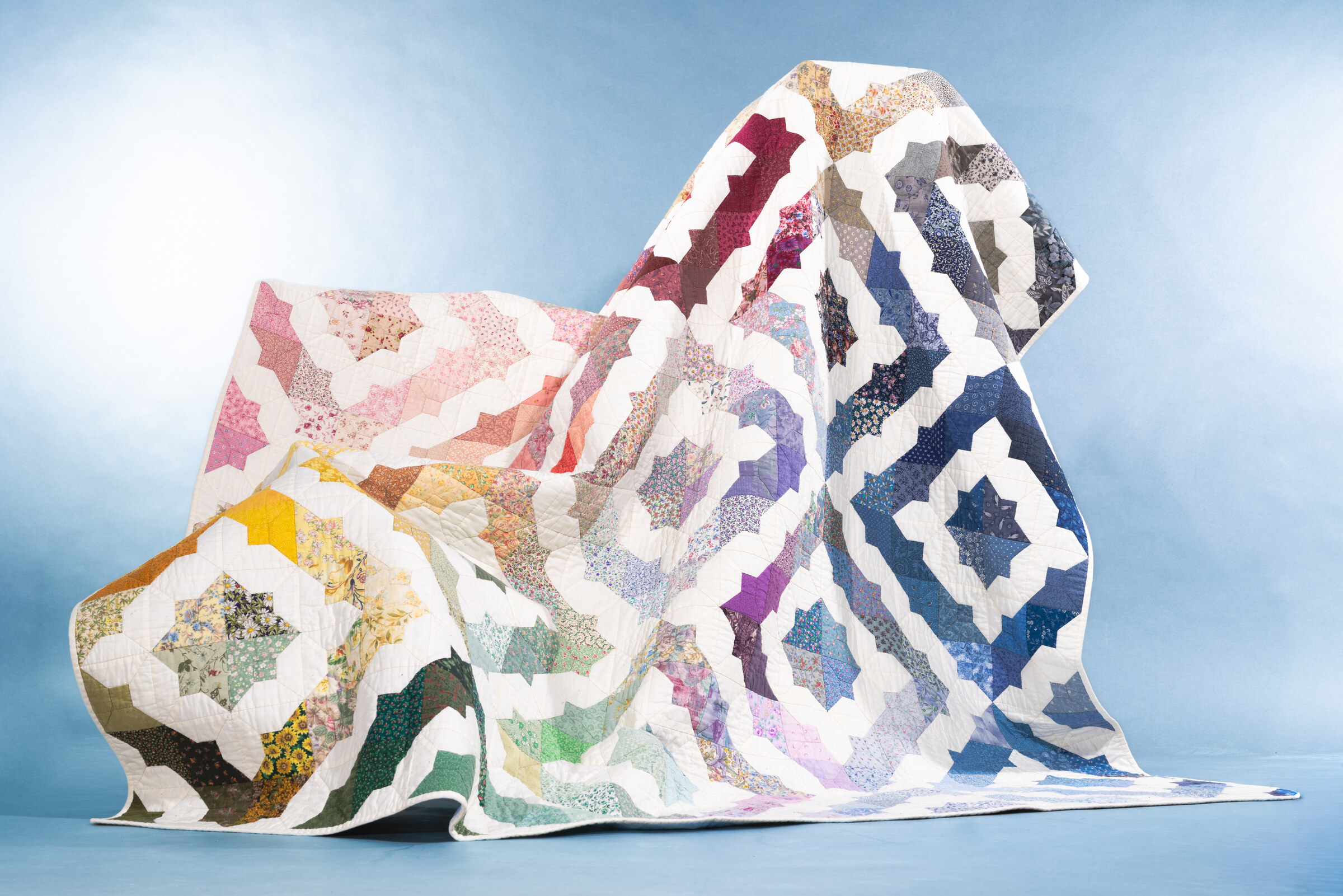
A large patchwork quilt in pink, yellow, green, purple and blue star blocks, draped loosely over a stand against a pale blue backdrop.

Time for Quilting / Time being Quilted

More than a textile.
A way of living.

Quilting is more than a textile technique. It is a way of working that values time, repetition, repair and care. Built layer by layer, quilts record gestures, relationships and everyday life – showing how making can become a form of living knowledge.

A black-and-white historical photograph of women and children gathered around a quilting frame.

Archive Photograph

Quilting was always a shared practice.

Before quilts were displayed in museums or collected as design objects, they were made together. Quilting bees brought neighbors, friends and families around the same frame, where sewing became a reason to gather, exchange stories, teach skills and spend time with one another. The quilt was never only the final object – it was the process that connected people.

The timeline below follows this collective history and traces how quilting evolved from a domestic necessity into a cultural practice that continues to foster community today.

Historical Surface

A history stitched together

Assembled like a quilt, each block marks a moment when quilting became more than a textile: a shelter, a political statement, a family archive, a form of resistance or a way of preserving memory. Together, these fragments reveal how quilts have carried stories across centuries.

A black-and-white photograph of a quilted gambeson jacket with chevron-stitched sleeves and torso and a woven diamond-pattern skirt, displayed on a mannequin.
SurvivalProtection before Comfort
Survival Protection before Comfort

Before quilts covered beds, quilted textiles protected the body. Padded garments called gambesons absorbed impact beneath armour while providing warmth. The stitched layer first served survival before becoming a carrier of stories and memory.

The Tristan Quilt with stitched figures and narrative embroidery, cropped in on the two embroidered men.
NarrativeTristan Quilt
Narrative Tristan Quilt

One of the earliest surviving decorative quilts in Europe, the Tristan Quilt was created in fourteenth-century Sicily. Rather than serving only warmth or protection, its stitched surface tells the story of Tristan and Isolde, revealing quilting as a medium for narrative centuries before it entered museums.

A black-and-white photograph of women quilting together at a frame on a porch, surrounded by children playing with dolls.
CommunityQuilting Bee
Community Quilting Bee

Quilting bees brought women together to sew, exchange knowledge and strengthen community. Beyond making blankets, these gatherings preserved skills, stories and relationships, turning domestic labor into a shared cultural practice.

Two men embracing amid the panels of the AIDS Memorial Quilt laid out on the National Mall.
Collective memoryAIDS Memorial Quilt
Collective memory AIDS Memorial Quilt

First displayed in 1987, the AIDS Memorial Quilt transformed thousands of individual panels into a collective act of remembrance. By recording names, objects and personal stories, it became one of the world's largest community memorials.

A black-and-white panoramic photograph of quilts hanging together on a clothesline.
Economic resistanceFreedom Quilting Bee
Economic resistance Freedom Quilting Bee

Founded in Alabama in 1966, the Freedom Quilting Bee connected quiltmaking with economic independence during the Civil Rights Movement. Sewing became a way to create income, strengthen communities and turn collective labor into political action.

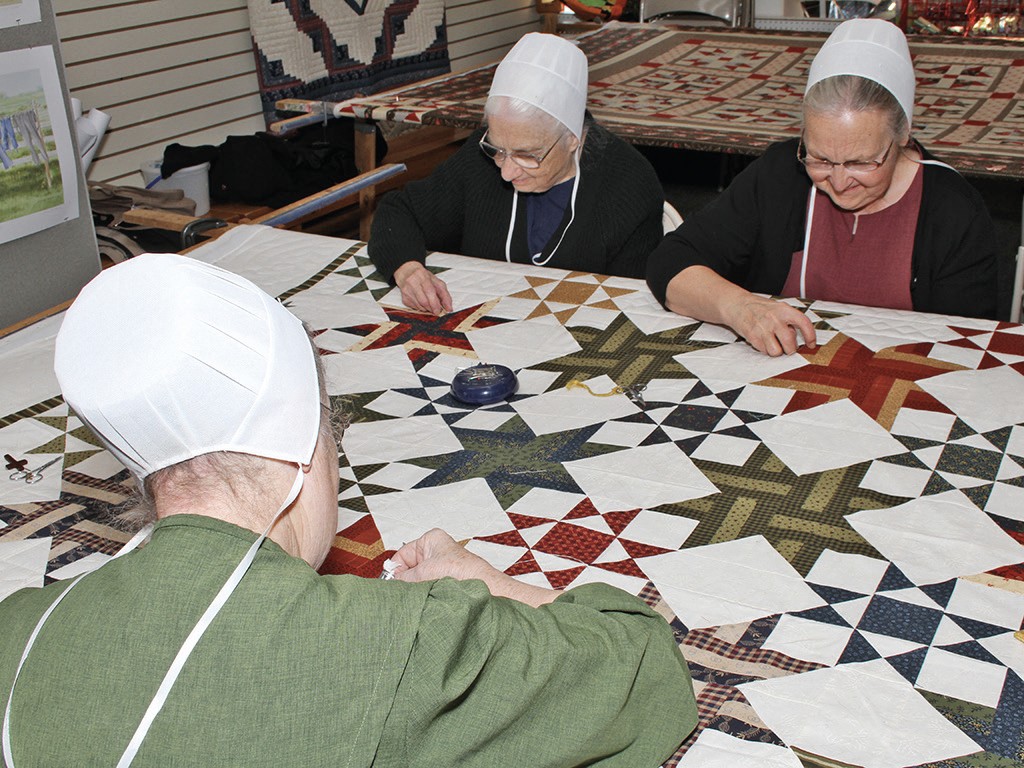
Three Amish quilters in bonnets hand-stitching a star-pattern quilt together at a table.
Visual languageAmish Quilt
Visual language Amish Quilt

Amish quilts reveal how simplicity can become visually powerful. Built from solid colors and geometric forms, they emerged from traditions of modesty while later being celebrated for their striking resemblance to modern abstraction.

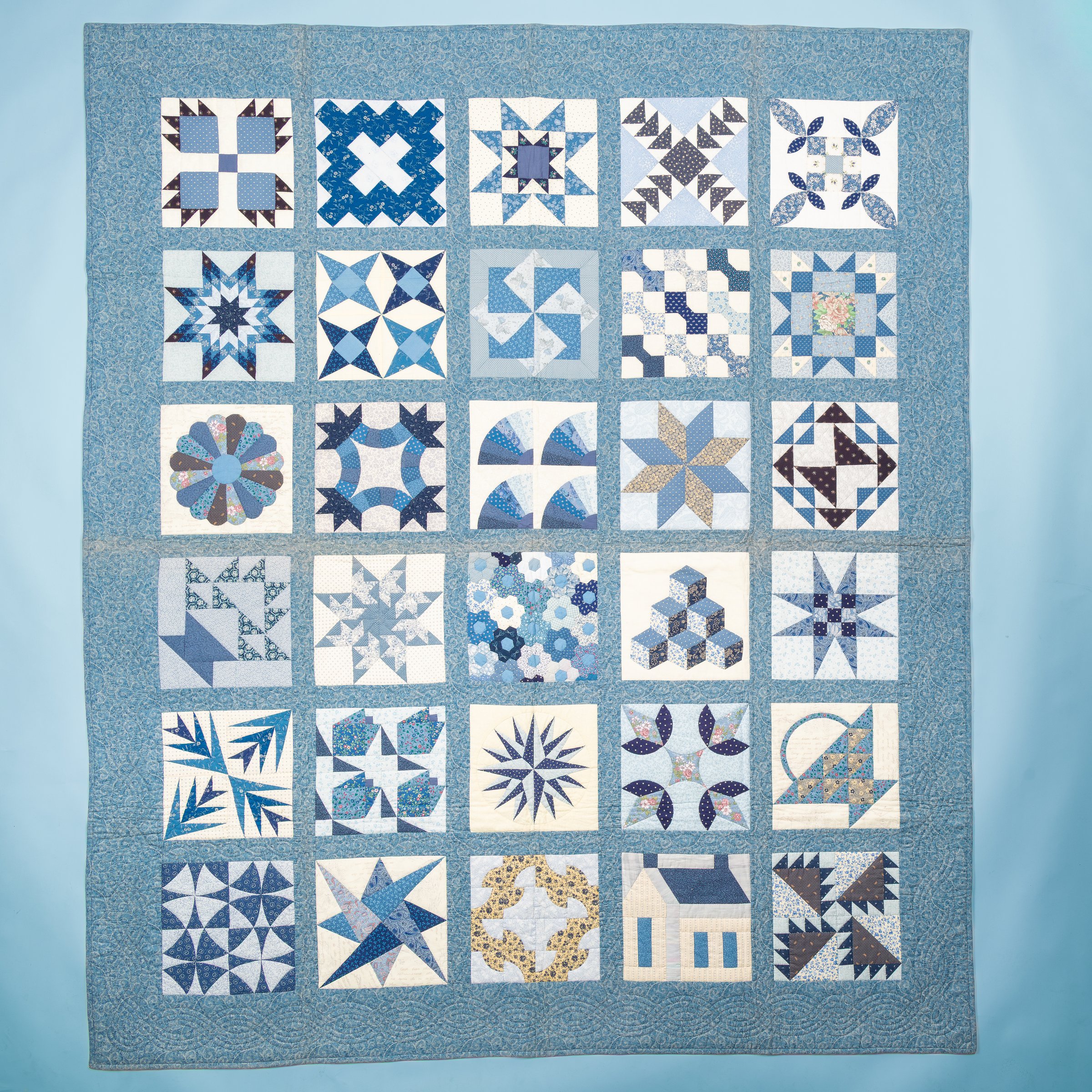
A blue sampler quilt with many geometric quilt blocks on a blue studio backdrop.

Practice Quilt Patterns

A practice quilt is also a visual system.

Kim Minseon's Practice Quilt Patterns is a sampler quilt composed of traditional block patterns, each square functioning as part of a textile visual language.

Blocks make learning visible. Each square studies a different rule: rotation, border, contrast, repetition and the way a pattern can be read from a distance. This belongs to the top layer because it is the surface where time becomes graphic: a readable structure made from many small decisions.

Block pattern grid module repeat rhythm square triangle diamond strip border color contrast scale surface system rotate mirror shift join cut place fragment unit motif sign symbol code texture fabric thread stitch seam layer edge corner center frame variation alignment interruption balance order irregularity memory hand time layer weight space harmony technique

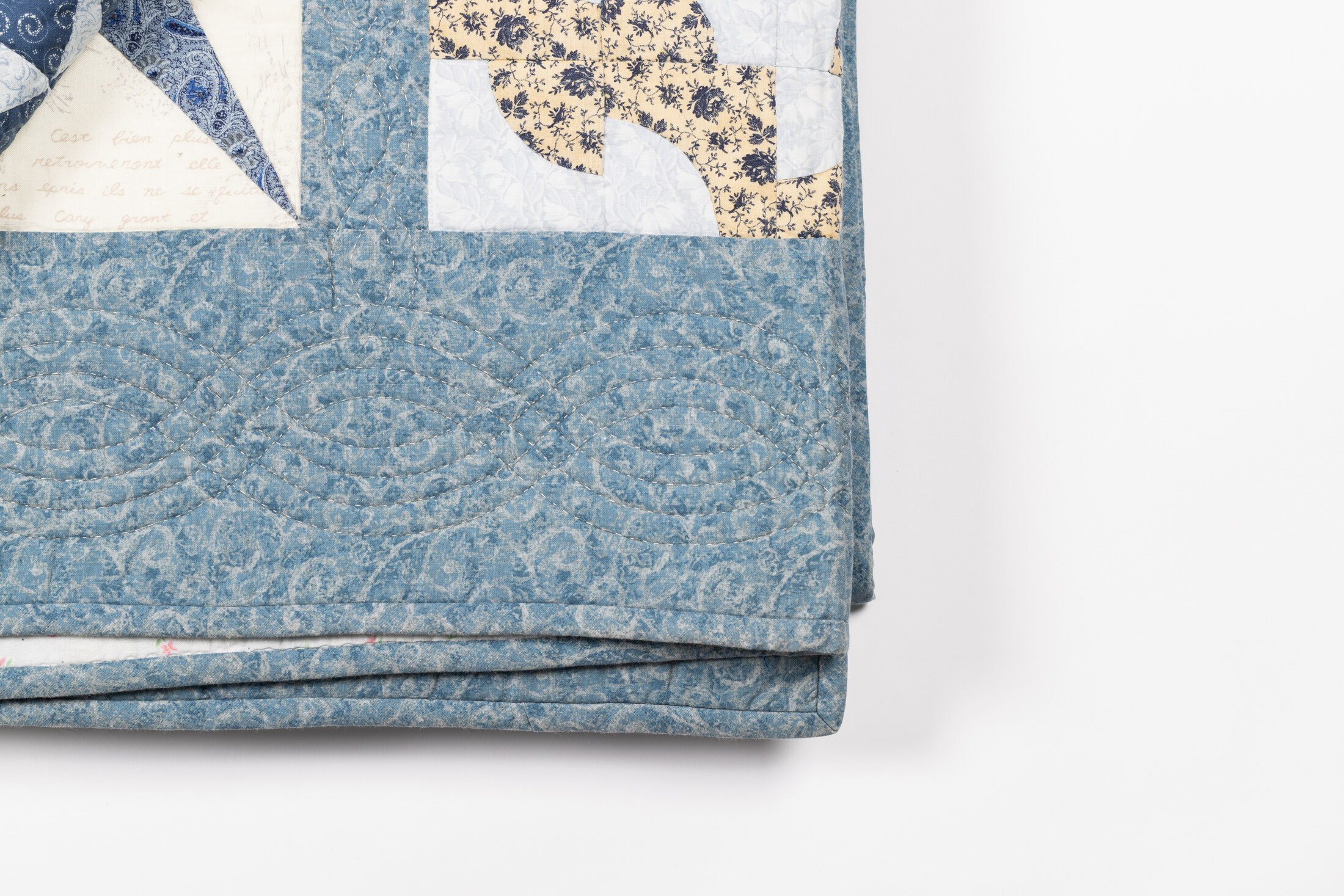
A folded corner of the quilt showing its paisley border fabric and a strip of cursive script fabric.
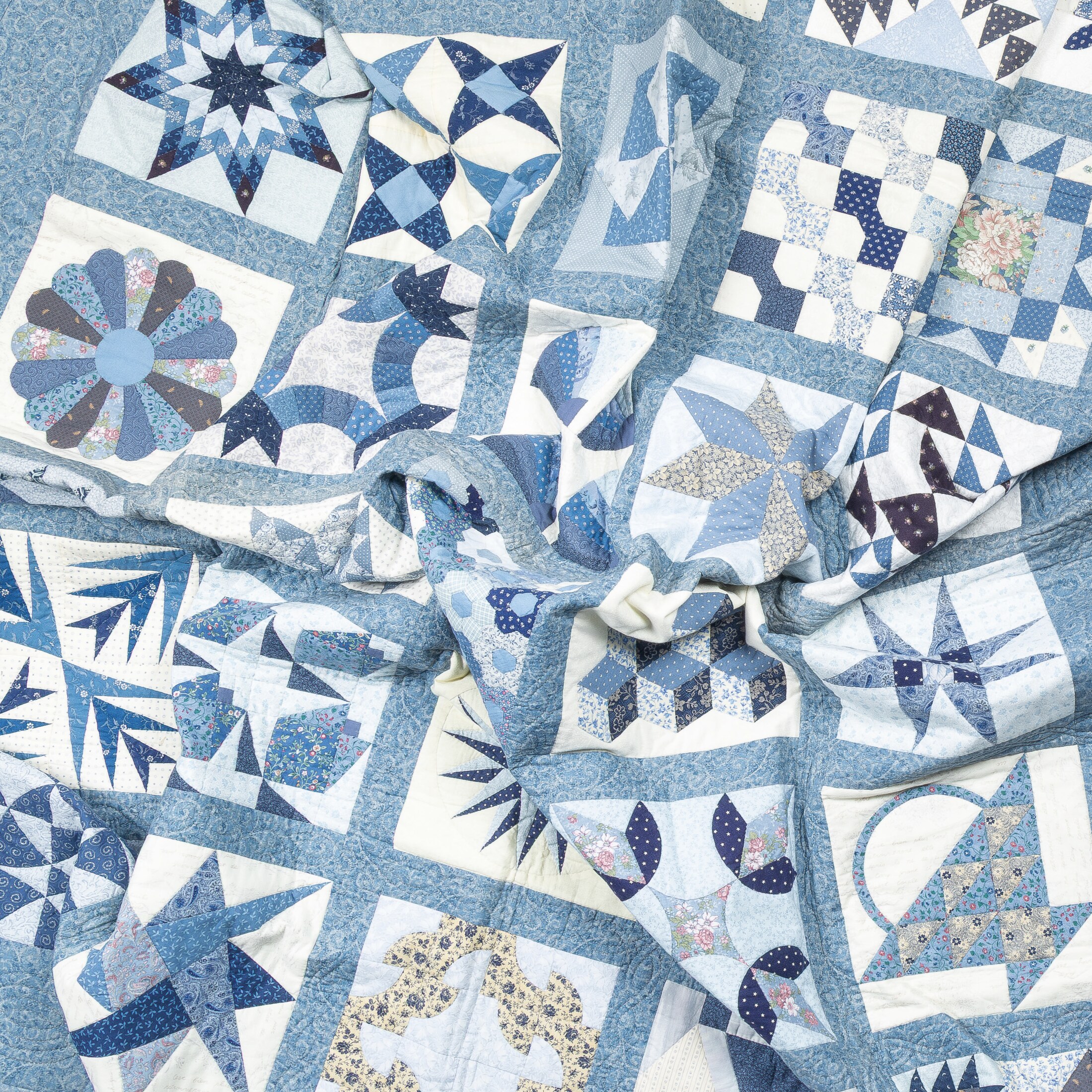
The full sampler quilt seen from above, bunched and crumpled at its center so the grid of blue star and pinwheel blocks folds in on itself.
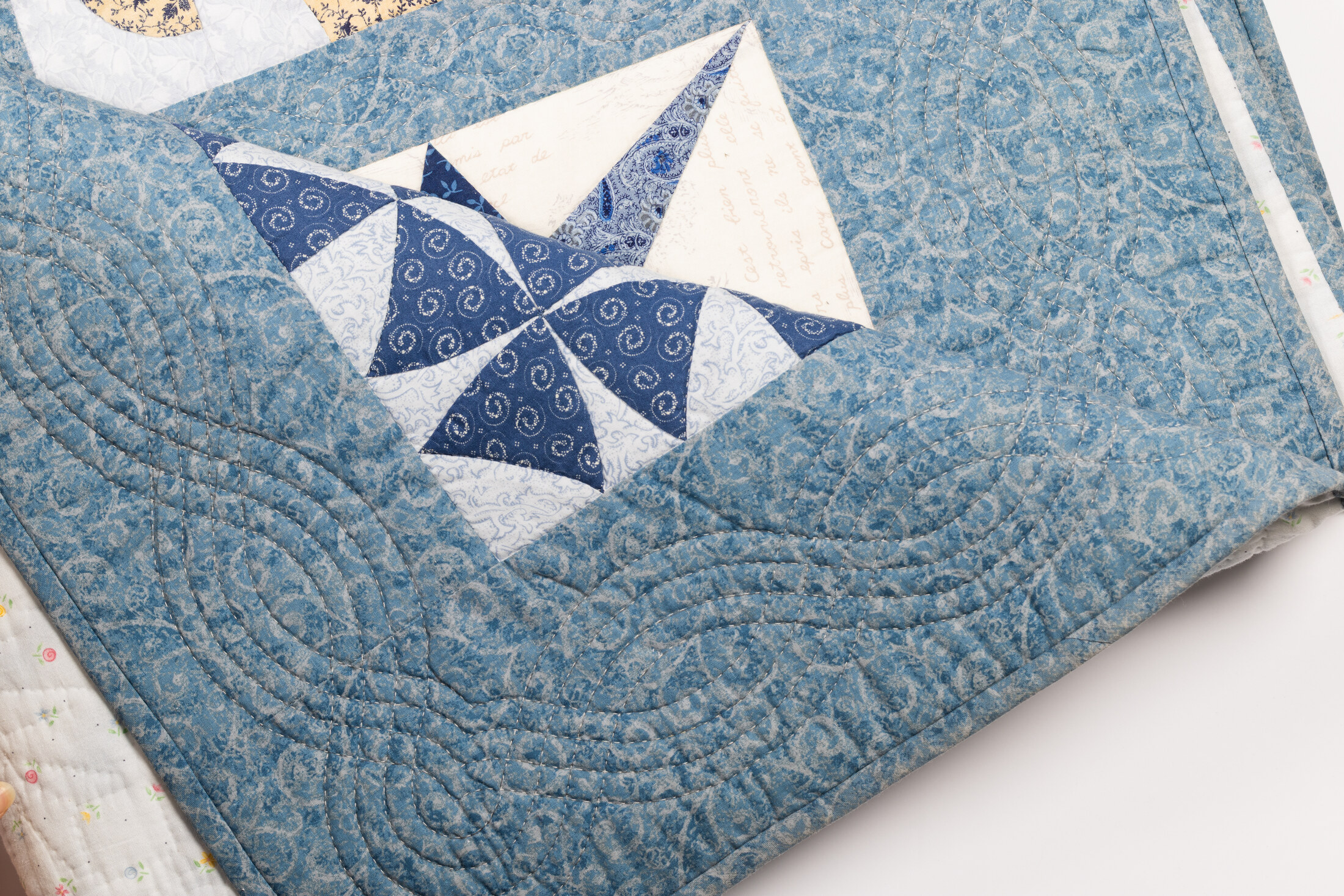
A macro view of a pinwheel block in navy and pale blue fabrics, with visible quilting stitches on the border.
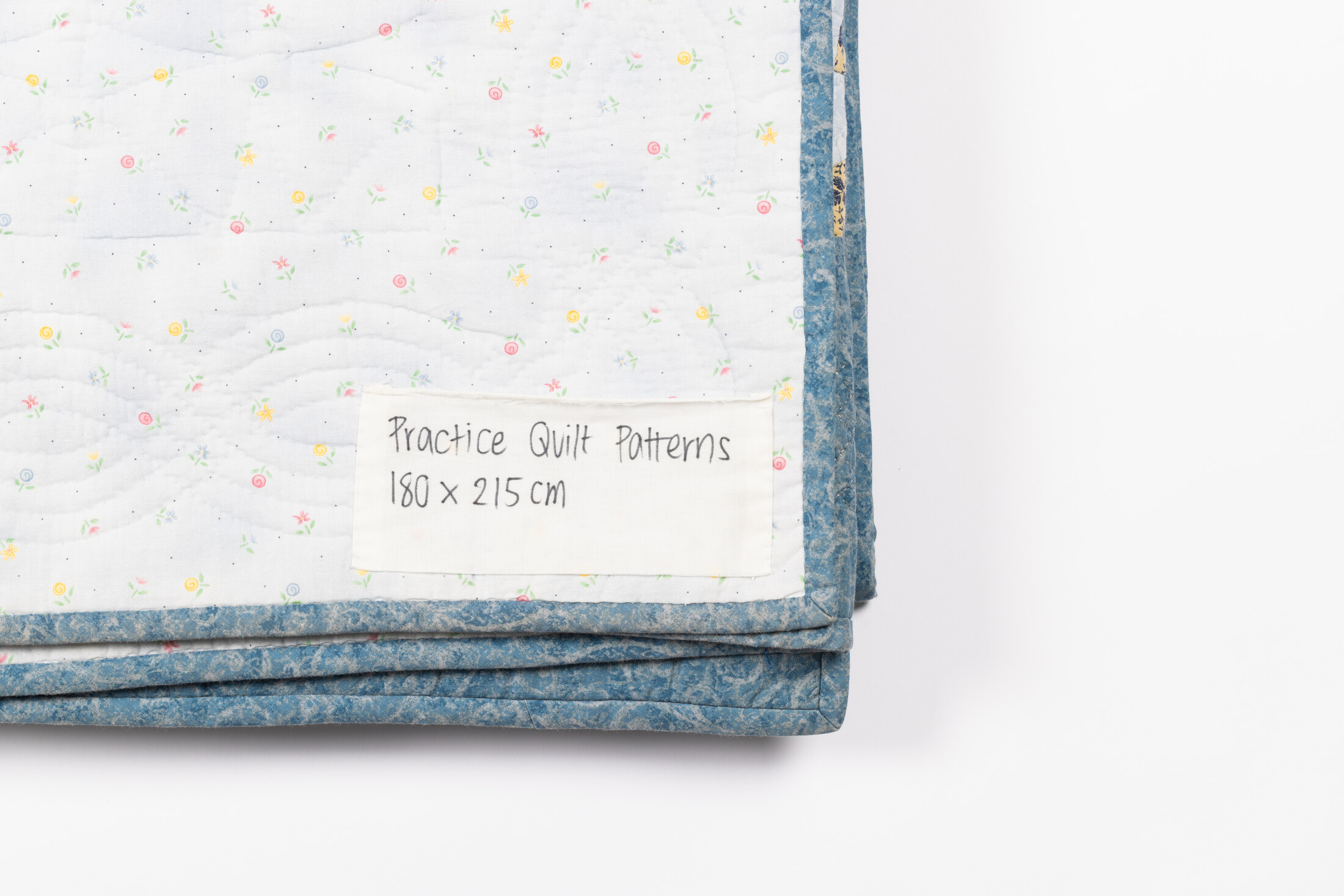
A hand-lettered fabric label reading Practice Quilt Patterns, 180 x 215 cm, stitched onto the quilt's floral backing.

When folded, the grid becomes unstable:
pattern turns into surface, weight and movement.

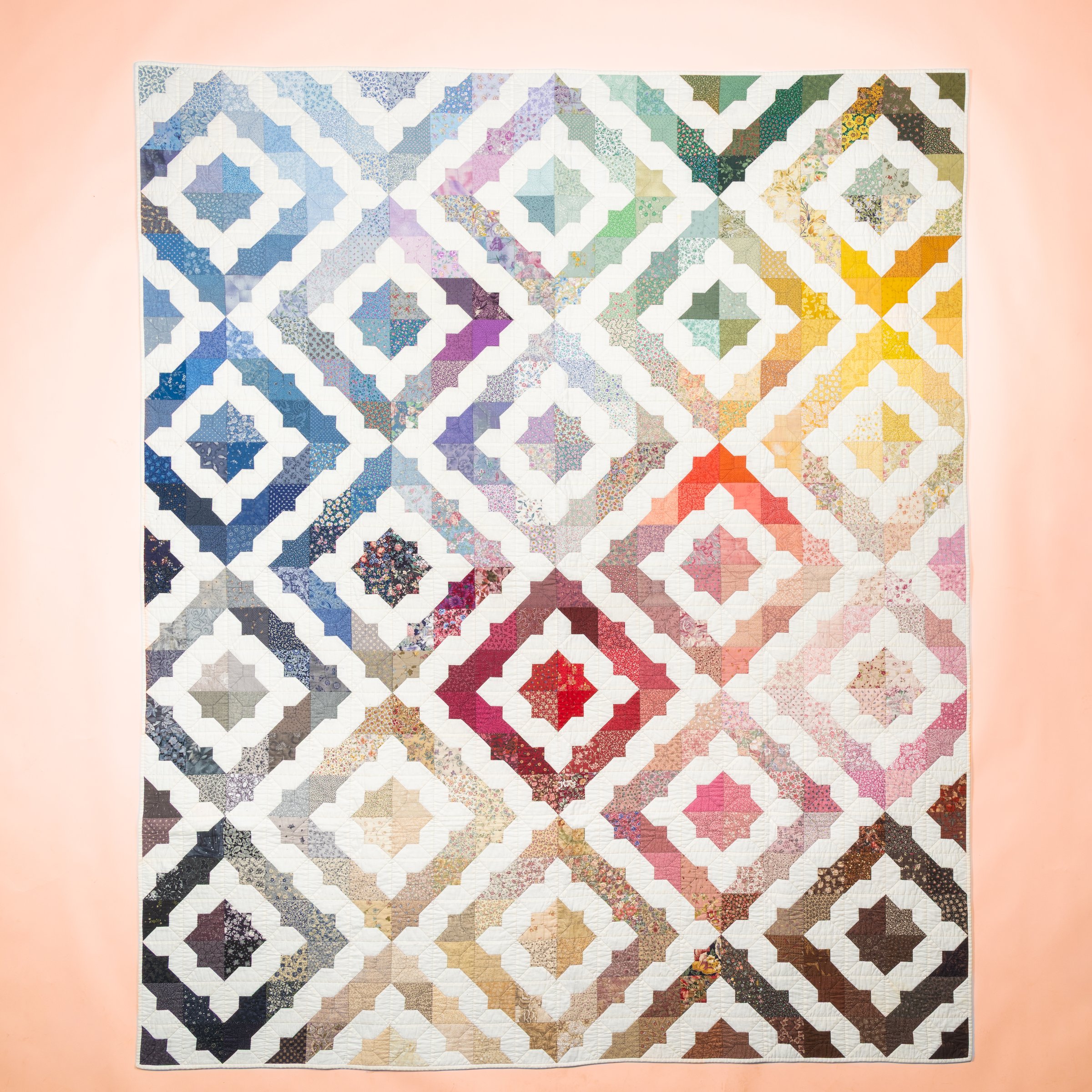
A geometric quilt with repeated diamond blocks on a clean peach studio backdrop.

Contemporary Relevance

Tradition is not the opposite of newness.

A quilt is already a modular interface: grid, palette, repeat, archive, user input, version history. The contemporary layer is not added from outside; it is already inside the logic of the craft.

Enter the emotional middle

Acquisition & Contact

Interested in a quilt?

Some of the quilts presented in this exhibition are available for purchase. If you are interested in acquiring a quilt or would like further information, please get in touch.

Contact

Soo Ah Youn

Quilting Time · 2026