Time
"I don't quilt to finish quickly. I quilt to enjoy the time and the process itself."
02 / The Batting / Invisible emotional core
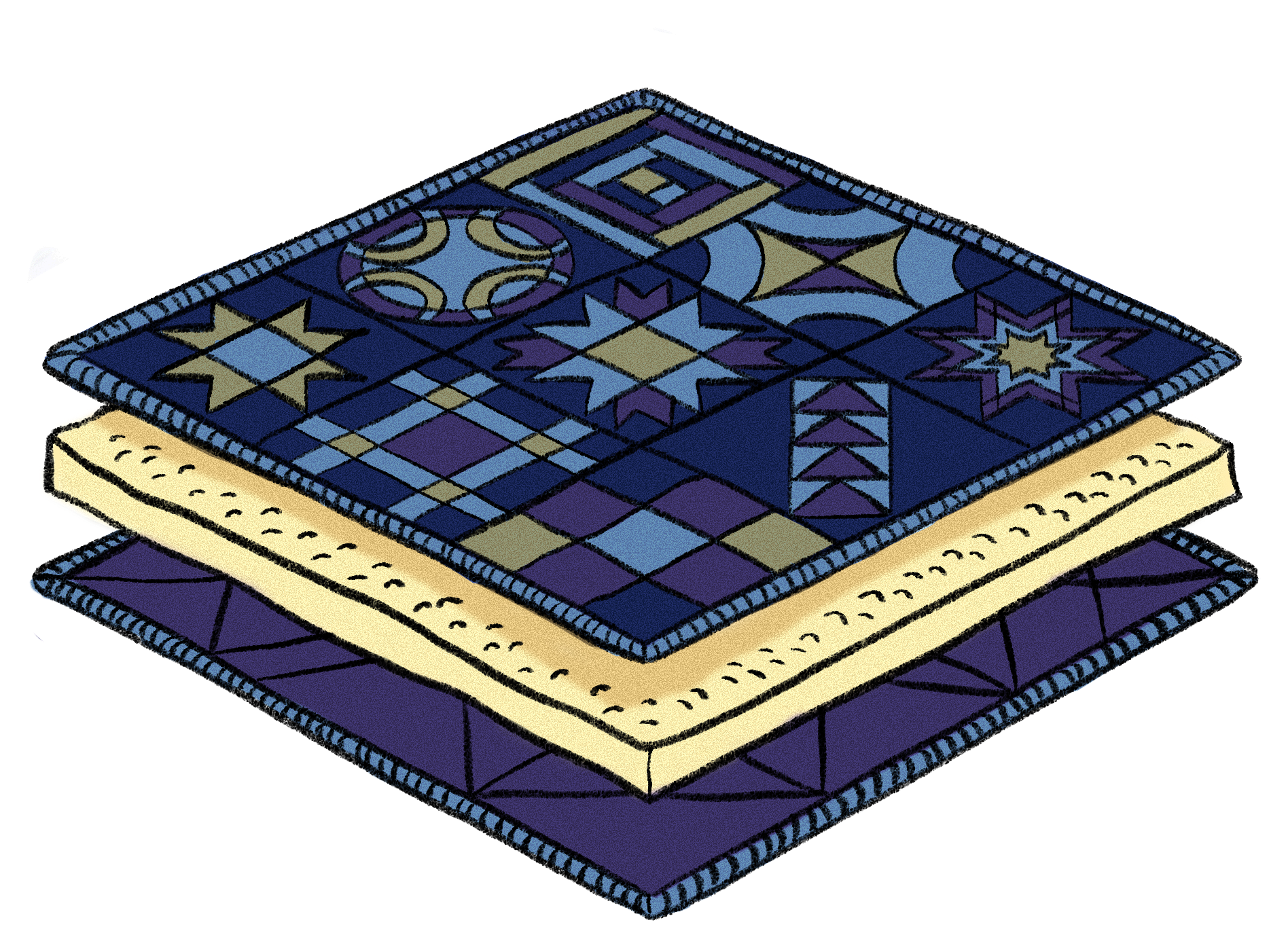
The batting is hidden, but it is the reason the quilt warms. This page enters Kim Minseon's room: hands, thread, repeated motion and the mental shelter of hand quilting.
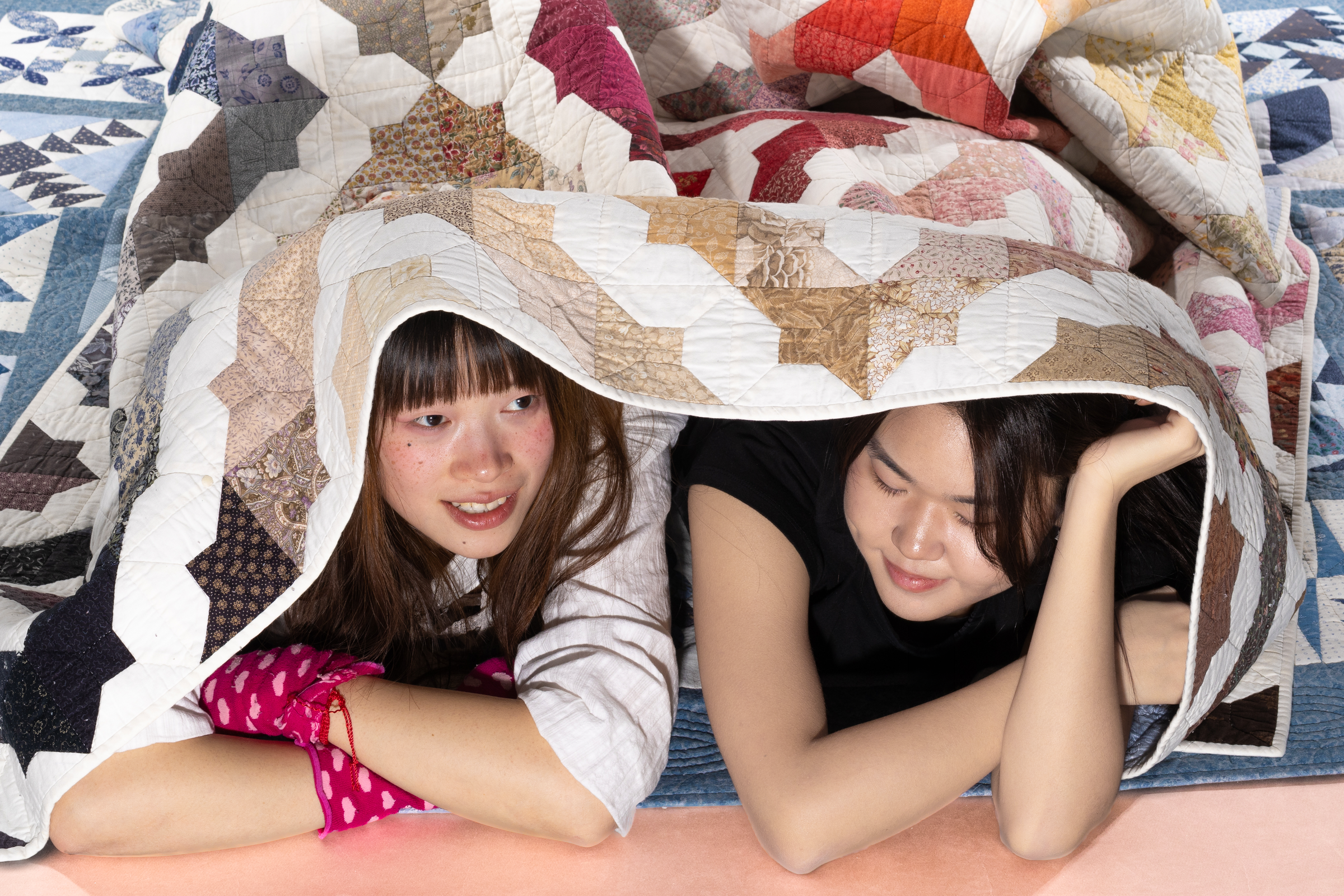
In the Room
It gives weight to the surface, warmth to the body, and turns fabric into shelter. Hidden between front and back, it softens what would otherwise remain flat. It is not the pattern, not the image, not the part that is shown first. But it is what makes the quilt hold you.
Kim Minseon / 30+ years by hand
She has quilted since 1993 and still does not use a sewing machine. Five to six months of daily labor become one blanket; four to five hours a day become weight, softness and care – a room against rushed time, a practice whose value lies not in efficiency, but in the time it asks us to give.
Measured in Time, One Quilt
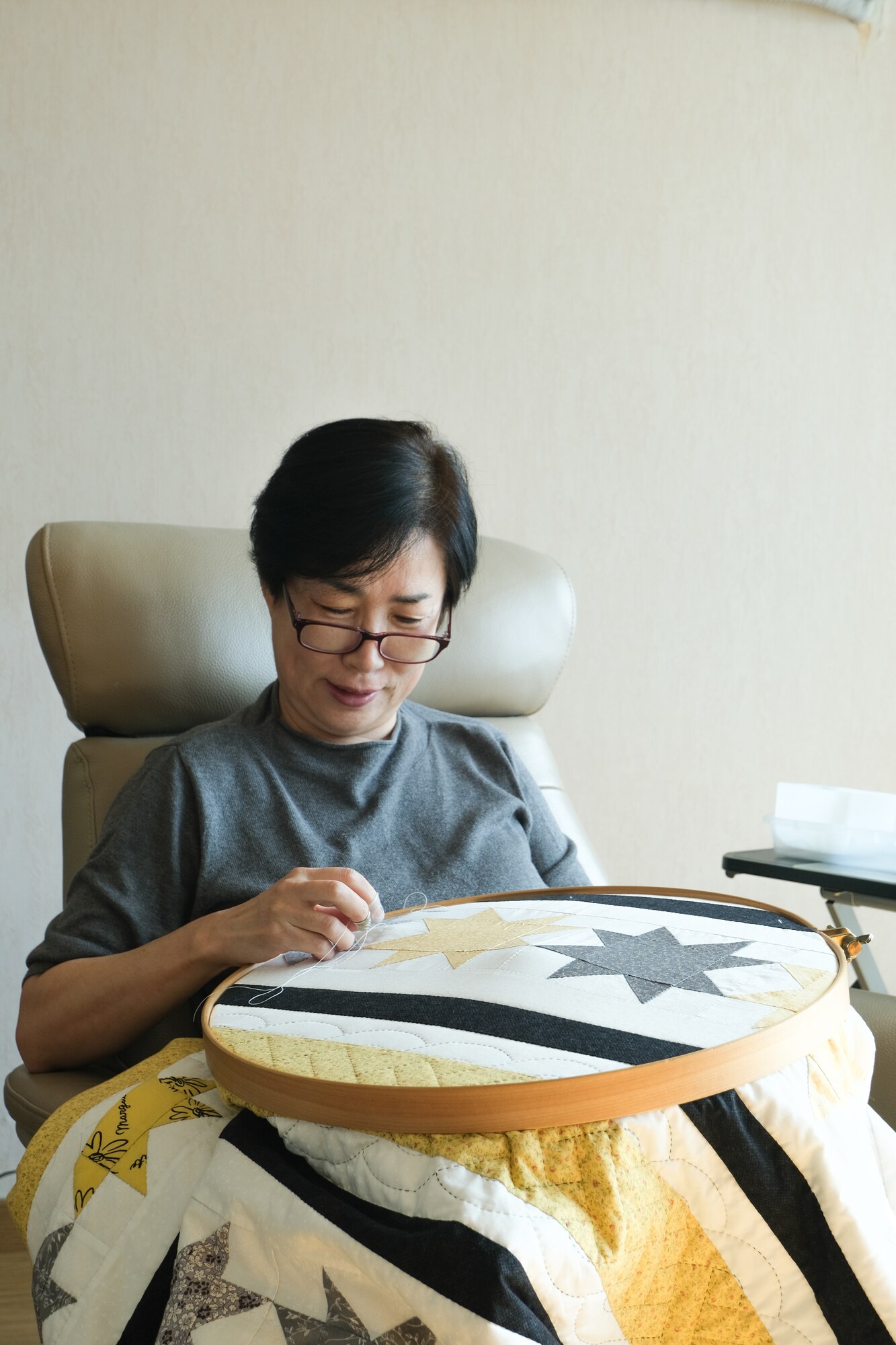
"I don't quilt to finish quickly. I quilt to enjoy the time and the process itself."
"After an hour of repetitive stitching, my mind clears. The anger fades."
"Long after my hands have stopped working, these stitches will remain. They are my signature."

A Different Tempo
Modern life increasingly moves toward acceleration: digital communication interrupts attention, work extends past fixed hours, even rest can become another task to manage. Sociologists such as Hartmut Rosa and Byung-Chul Han describe this pressure as a defining feature of contemporary life. Quilting resists it by design. An hour of work might change very little on the surface – progress is sometimes just one seam, one corner, one small section added to a larger whole. What looks like inefficiency is, instead, a different way of measuring value: not by output, but by the attention a maker is willing to give.
"You can only do one stitch at a time."
"It is a companion. It grows with you."
"When you gift a quilt, the recipient is immensely happy, and I feel respected."
04 – Textile Memory
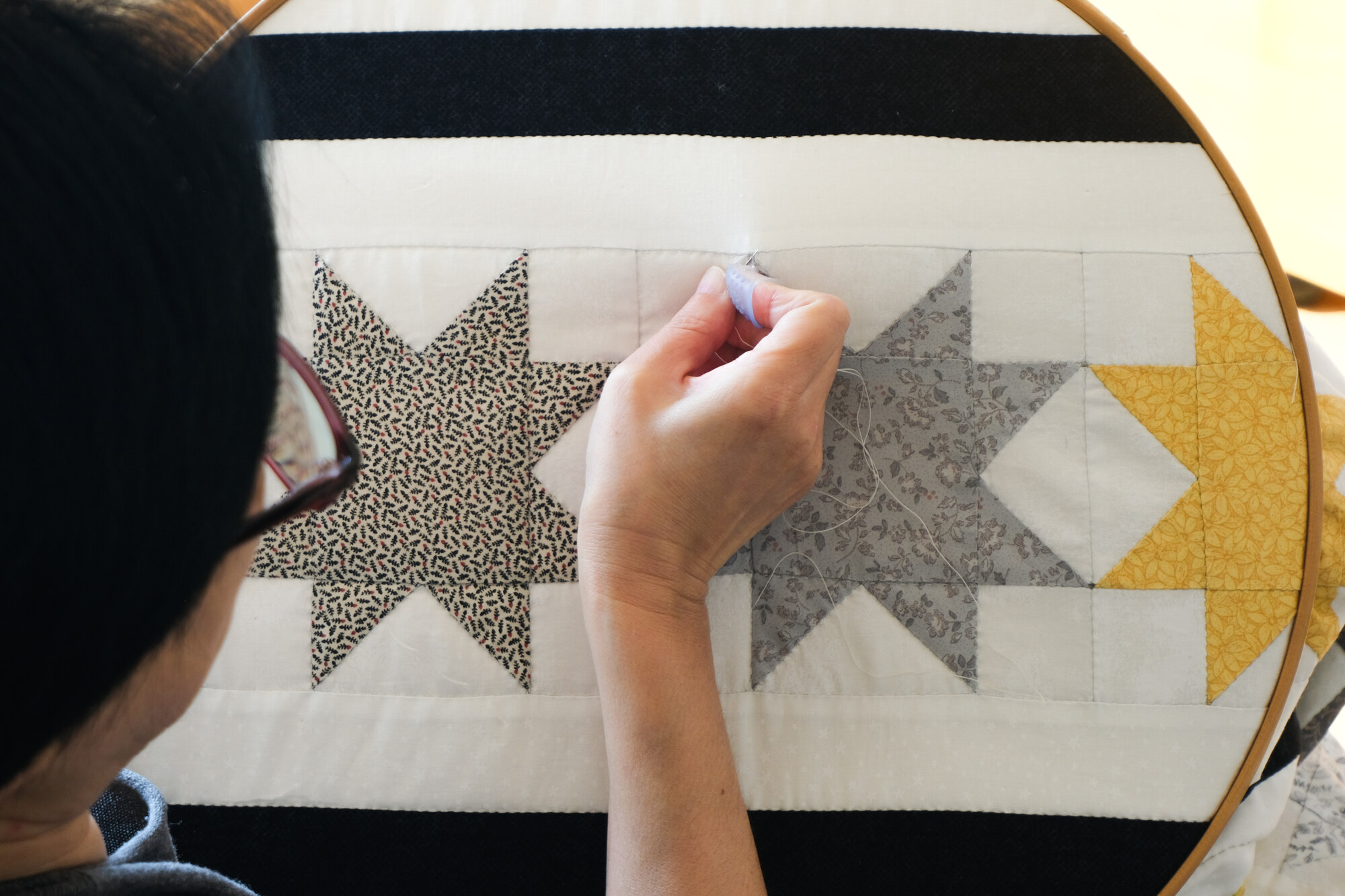
The following section is based on a recorded conversation with my aunt, Kim Minseon, on October 29, 2025. She has been quilting since 1993. The interview was conducted in Korean and is translated and edited here into thematic fragments rather than reproduced as a strict transcript. This format allows the conversation to move through the emotional layers of her practice: how quilting entered her life, why she stayed with it for more than thirty years and how fabric became a way of holding time, family and inner calm.
You started quilting in 1993, when you were 33. When did it all begin?
We had just moved to Mokdong and my son had started kindergarten. Suddenly, I had a lot of time. I thought I needed some kind of hobby. Since I was young, I always liked knitting and making things with my hands, and at that time quilting was becoming very popular in Korea, so I started to quilt as well. I have always been introverted. I don't really like going out or doing activities outside. I prefer sitting quietly at home, making something with my hands. Quilting fit me because it was something I could do alone and something I thought I could continue even when I got older, but I never imagined I would keep doing it for 32 years.
Why did you never turn quilting into a profession?
At the time, my only child was still young, and with my personality, I could not imagine leaving him at home and going out regularly for work. Quilting became something that belonged to my own rhythm: a quiet personal hobby, not something I wanted to turn into a job. In my generation, textile work was even less likely to be seen as a real profession.
Did you learn quilting by yourself?
At first, I wanted to learn so badly that I bought Japanese craft books from bookstores. Japanese books were very detailed and full of small objects – baby quilts, pillows, balls, dolls, wall hangings, bags. That is why I started with small pieces. Later, after learning in cultural center classes for a few years, I felt that I was learning indirectly, only by looking over someone's shoulder. So I went to a quilt class in Gangnam and studied properly: beginner, intermediate, advanced classes, the history of quilting, exhibitions, even how to tie knots correctly and draft patterns. After that, I understood that when you learn something, learning it systematically makes a real difference.
Do you think beginners today sometimes skip too much?
These days, some people buy quilt kits online and just sew them together without learning the process. But if you don't go through the proper steps, the result shows it. Quilting has a long process. Fabric needs to be washed because cotton can shrink or bleed color. The seams need to be prepared carefully. If someone just rushes through it, they spend money but the finished piece does not come out beautifully. Everything needs a process.
– thirty-two years, one chair
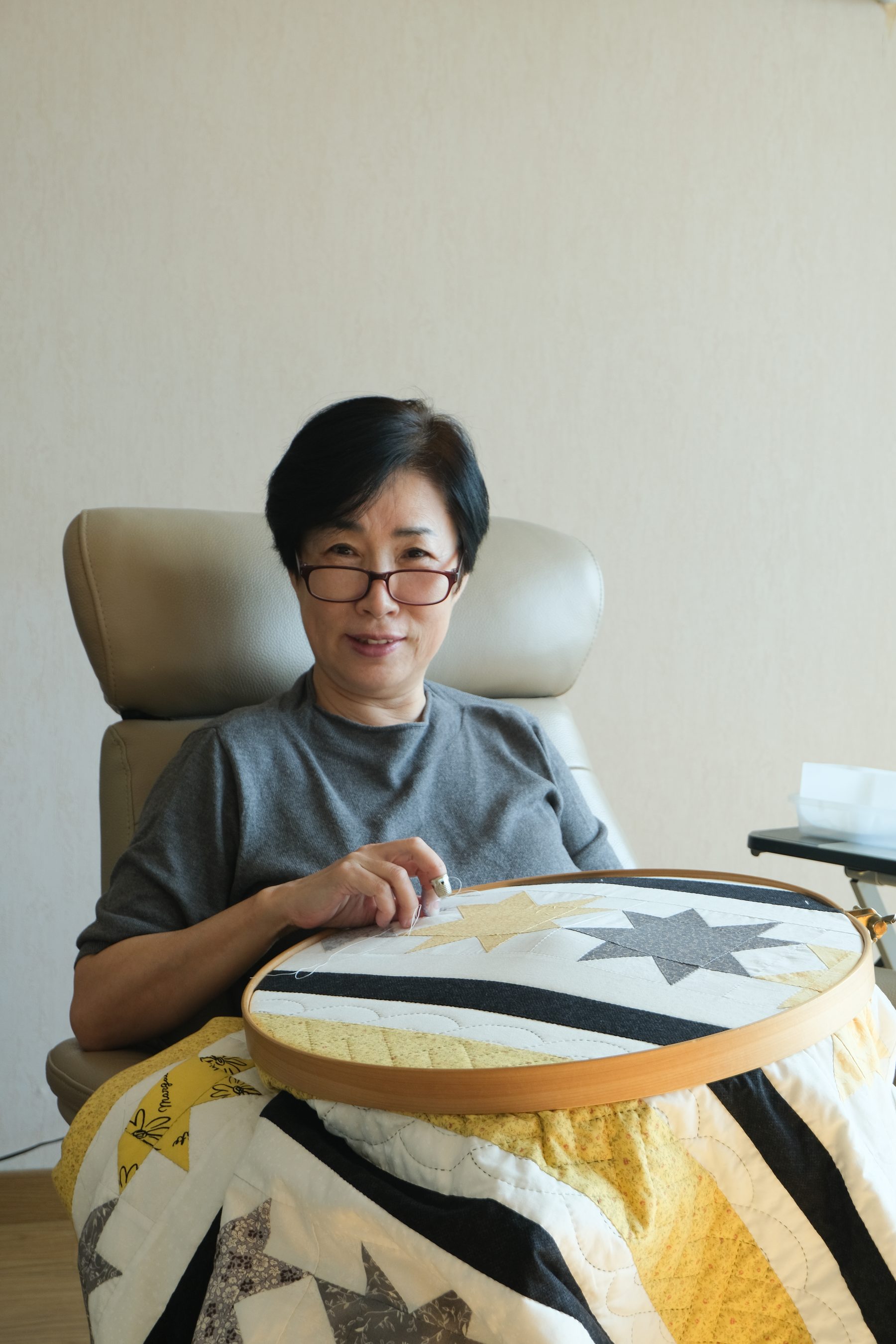
Can you describe the process of making a quilt?
First I decide what I want to make. The starting point can come from a quilting book, Pinterest or a pattern I have seen and want to reinterpret. Before I begin sewing, I spend a lot of time preparing. I need to understand the structure first: how the pattern is built, how the blocks repeat, how many pieces are needed and what size the finished quilt should be. I often begin with sketches and notes. I draw the pattern by hand, calculate measurements and sometimes test color combinations before choosing the final fabrics. These drawings are important because they help me imagine the quilt before cutting. In a way, the quilt already begins on paper.
After that I go to Dongdaemun to buy fabric and combine it with what I already have at home. Choosing fabric is also slow. I think about color balance, contrast and how different prints or solids work together. Then the fabric is washed to prevent shrinking and color bleeding, dried and ironed.
Only then do I begin cutting. I transfer the pattern pieces, cut the fabrics and organize them carefully. For complicated quilts this alone can take several days. Then I sew the pieces together step by step. That is the patchwork stage, where small fragments slowly become the quilt top. When the top is finished I press the seams carefully, because quilting becomes easier when the seam allowances are even. Then I layer the top, batting and backing, baste them together and begin quilting. This is usually the longest stage and can take two or three months.
Finally, I finish the edges with binding. For one blanket the whole process usually takes at least five or six months, sometimes more than a year, depending on the size and difficulty.
A quilt takes a long time, but that is why it holds so much of the maker inside it.
So the preparation is just as important as the sewing?
Very important. Even if I have a lot of fabric, the tone can be wrong. I always say, "I have no fabric," and another quilter might say, "How can you say that with so much fabric?" But one green can have the wrong nuance. The color changes everything.
In many contemporary quilting contexts, quilting machines are a common part of the craft. Why don't you use a quilting sewing machine?
Some people think it would be better because it is faster and easier. But I am doing this as a hobby. I do not want to sew quickly and finish the blanket fast.
I want to enjoy the process of quilting.
Even when someone in our group suggested buying a quilting machine, I said: what is the point of making it quickly as a hobby? I am not doing this because I need more finished blankets. I want to spend time hand-sewing. The purpose is not only making the object. Hand quilting also feels different. A machine stitch is tighter and more fixed, so the blanket can become stiffer. With hand stitching the quilt stays softer and more flexible. It moves better, folds more naturally and wraps around the body in a gentler way. For me that softness is part of the value. A machine can make a quilt, of course. But hand quilting carries time differently. The value is not only in the finished blanket. It is in the hours spent making it.
So the process matters more than the result?
Yes. I want to enjoy my leisure time. At first I never thought about selling. I made quilts to give to family, to my son, to my sister and to people I knew. Only later, because so many quilts accumulated, some people began asking if I could make or sell one to them. But that was never the original purpose.
– by hand, one stitch at a time
Now talking about the value behind your handmade quilts. Is it difficult to price your quilts? Are there any known measurements?
It is very difficult. Honestly, I don't really want to sell them. I think I understand why farmers feel attached to what they grow. After doing this for more than thirty years the quilts keep accumulating, but still I rarely want to let them go. Even in my own daily life I only use two quilt blankets because they feel almost too precious to use. The materials are expensive, especially the imported fabrics, but the real difficulty is the labor.
If I work on a large quilt every day it would still take about five or six months to finish. So if I calculate the fabric, the batting, the thread and all those hours of handwork, a large quilt should realistically cost well over one million KRW, which is approximately 750 USD.
Only other quilters understand the true value since they know the labor. They may think, "I would rather buy it than make it myself." But to an ordinary person who buys factory-made blankets, that sounds absurdly expensive. That is the dilemma of quilting. If someone asks me to make a bag and I say it costs 300,000 KRW, they might ask me to lower it to 200,000. But then it feels like a loss. It hurts my pride because I know how much time is inside it.
That is why quilt shops usually sell the process: the classes and the materials, rather than finished quilts. If they calculated the material and labor honestly, people would not buy them.
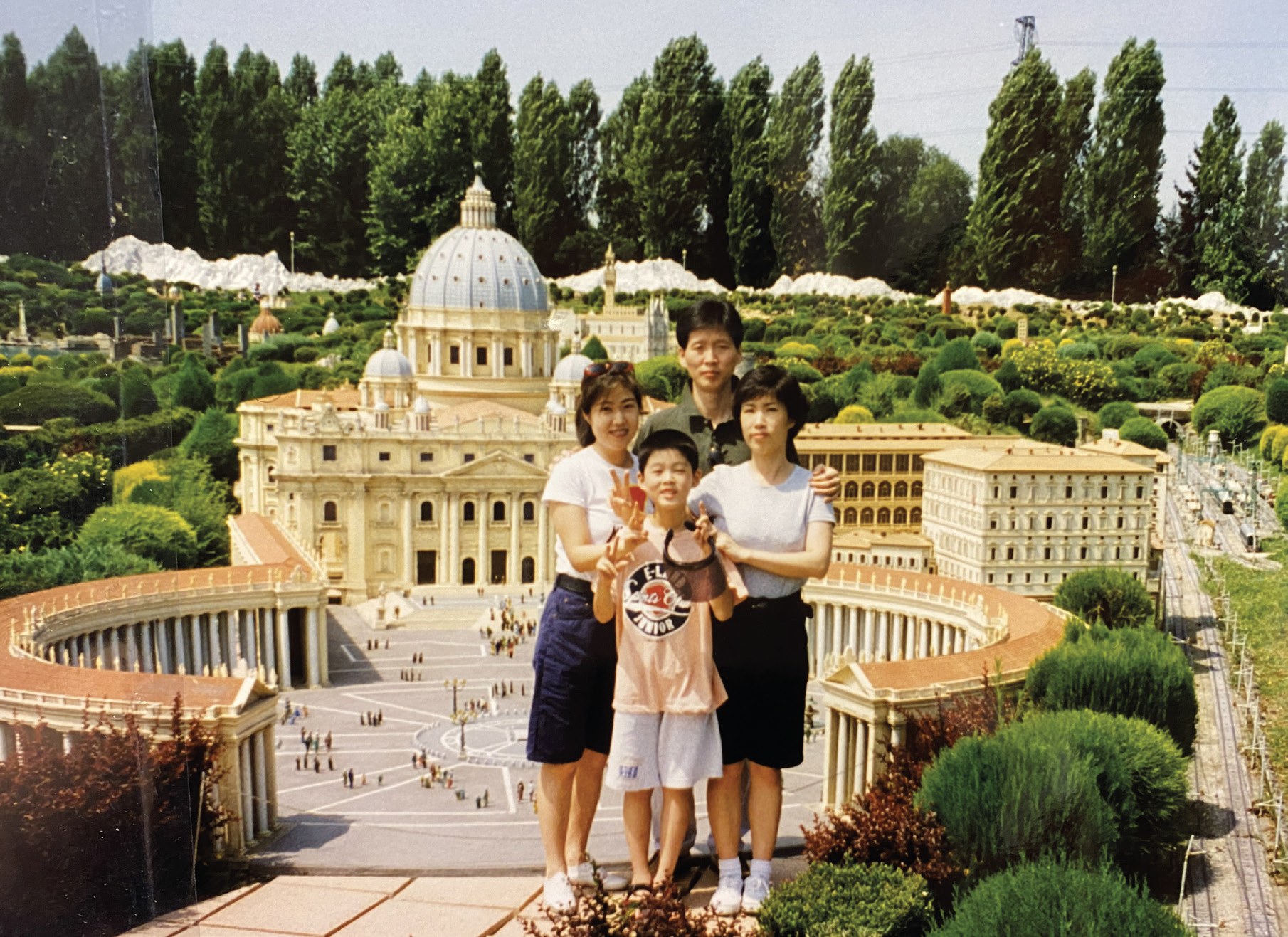
You also made quilts for our family. Can you talk about the quilt you gave my mother?
Your mother was the youngest on my side of the family, and when she married and moved abroad I felt sad about her leaving. So I gave her one of my early quilts when she moved to Italy, and she still has it until now. I actually get upset because it is so old, almost thirty years old, and I have made prettier and much better quality quilts since then. I told her to throw it away and just use another one, but she says she likes that one. It has become worn, but at the same time, since it is made of cotton, it also became softer over time. Maybe that is exactly why she keeps it. For me it is an early piece and I see what is lacking in the colors and technique. But for her it probably carries something else.
This moment became one of the clearest examples of textile memory for me. The maker sees the work technically: what is old, imperfect or outdated. The person who lives with the quilt remembers differently. The object has traveled with her, softened with use and stayed through time. It is no longer only an early quilt. It has become a record of leaving, arriving and remaining.
– Italy, decades ago
What does quilting do to you emotionally?
If I didn't have quilting, I think I might have become depressed during difficult times. When I feel sad or upset and begin sewing, I can enter a state of no thought. When my son was in middle and high school and came home late from academies, I felt bad sleeping before he came back. I also could not really read because the words would not enter my head. So I quilted while waiting. That time felt productive and just good use of time.
What happens when you sew while angry?
At first, when I am angry because of family problems or other things, I sometimes sew incorrectly. My hands are unsettled. But after about an hour, my head becomes clear and my heart feels purified in a way. I begin to think: this too will pass, I cannot solve everything, I should accept what I cannot change. Then I just focus on making the quilt beautiful.
What does quilting mean to you personally?
I cannot imagine life without quilting now. I always say to my husband, "What would I have done if I had not had this?" I don't like learning new things, I don't like going out much and I don't like meeting many people. But quilting fits me perfectly. Even if I were alone later in life, I think I could still continue. If someone told me to study Maths or English all night, I could not do it. But if someone told me to quilt all night, I could.
If you had to define quilting in one word?
I really cannot think without it. When I don't quilt, I just end up lying down or watching television and dozing off. If I nap during the day, I cannot sleep at night. So I quilt. When I am not doing housework, I quilt.
It is life, so quilting is a companion to me.
– a companion, all these years
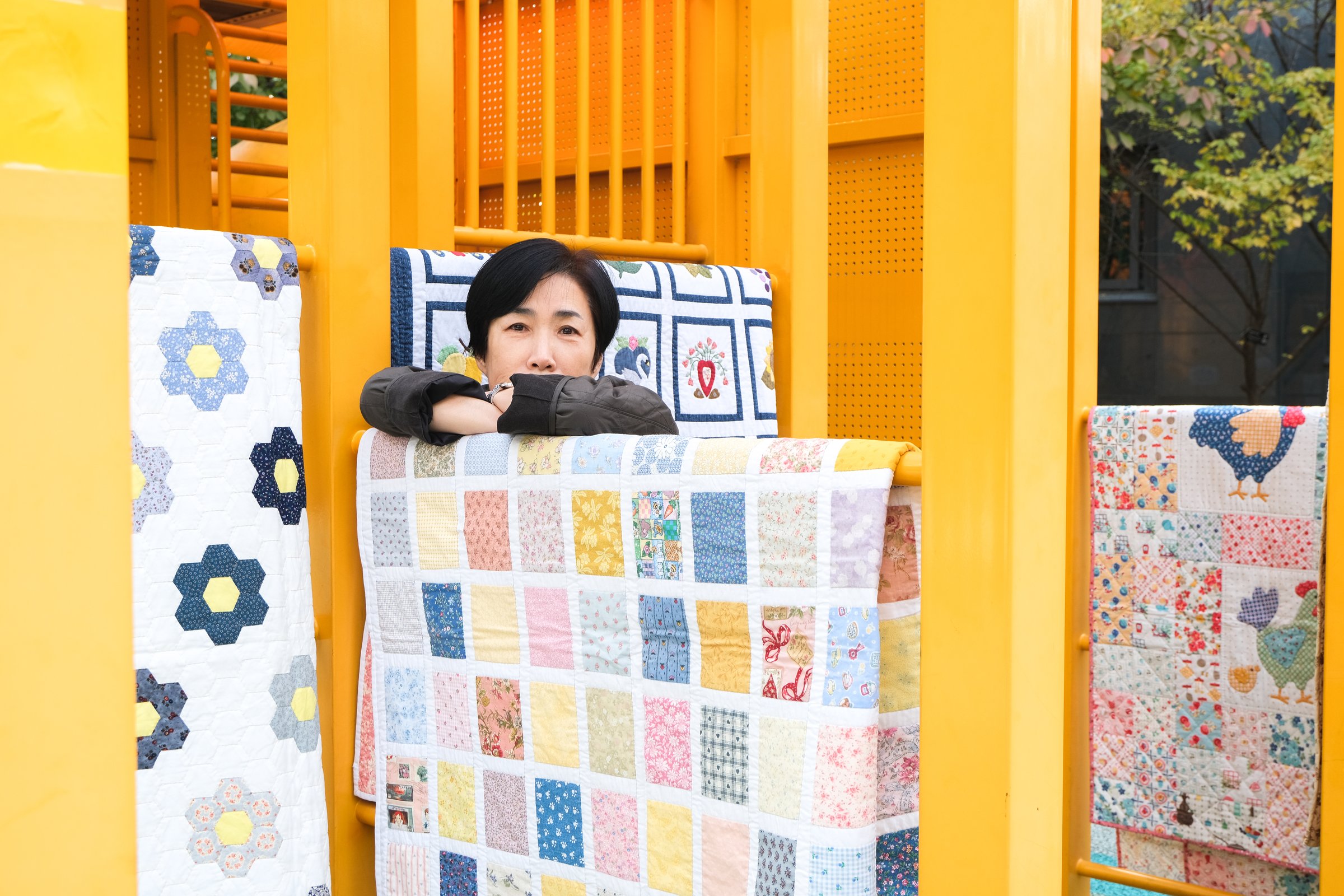
When are you happiest while making a quilt?
The happiest moment is when I finish the last round of binding. There is only one round left, but somehow that last round feels so slow. When it is finally done, my son and husband hold the quilt up because I cannot photograph it alone. I take the picture and think, "How did I make this? How did these tiny pieces become thousands of pieces?" Sometimes I think I must have been crazy. But I feel so happy.
In this conversation, quilting never appears as a simple hobby. For my aunt it is not only a way of producing blankets, nor only a skill developed over 32 years. It is a rhythm that entered the empty spaces of daily life and stayed there. It became a way to wait, to calm down, to give, to remember and to remain connected to family across distance.
What I find most important is that her answers never separate the object from the time inside it. The quilt is not only the finished blanket. It is the mornings, afternoons and nights spent stitching. It is the fabric chosen because one shade of green felt right. It is the old quilt my mother refuses to throw away, and it is the last round of binding. Her quilts do not only preserve fabric but a way of living with time.
Although much of Kim Minseon's practice happens quietly at home, quilting has never been completely solitary for her. For more than 20 years, a quilting group has accompanied her work and everyday life. Their role as emotional support, shared knowledge and community structure returns in the Backing section of this site.
Some of the quilts presented in this exhibition are available for purchase. If you are interested in acquiring a quilt or would like further information, please get in touch.
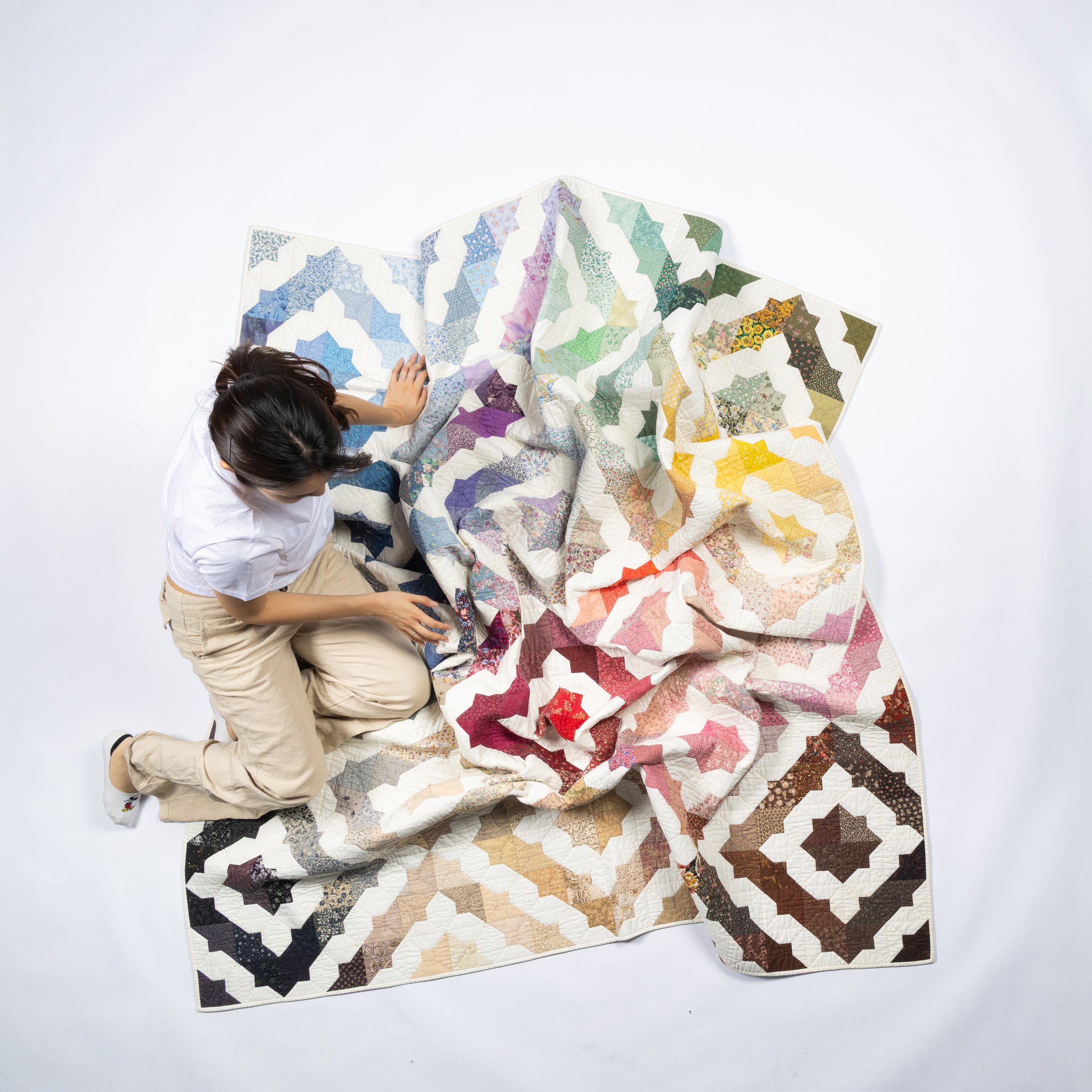
From memory to participation
You have felt what the batting does without ever seeing it. The next layer asks something different of you.Open the digital quilting space
Acquisition & Contact
Some of the quilts presented in this exhibition are available for purchase. If you are interested in acquiring a quilt or would like further information, please get in touch.
Quilting Time · 2026